
Sciatica Treatment in Lahore & Rawalpindi
Most sciatica improves without surgery — and the right physiotherapy can relieve the shooting leg pain, take pressure off the nerve, and stop it coming back. At PMC (Pain Management Clinic) by Dr. Waqar Ali, we treat sciatica by finding and addressing its root cause — usually a compressed or irritated sciatic nerve in the lower back — with a personalized, non-surgical plan combining advanced physiotherapy machines, hands-on manual therapy, nerve-mobilizing techniques, and targeted exercise. Start with a detailed spine and nerve assessment at our Lahore or Rawalpindi centers.
What is sciatica?
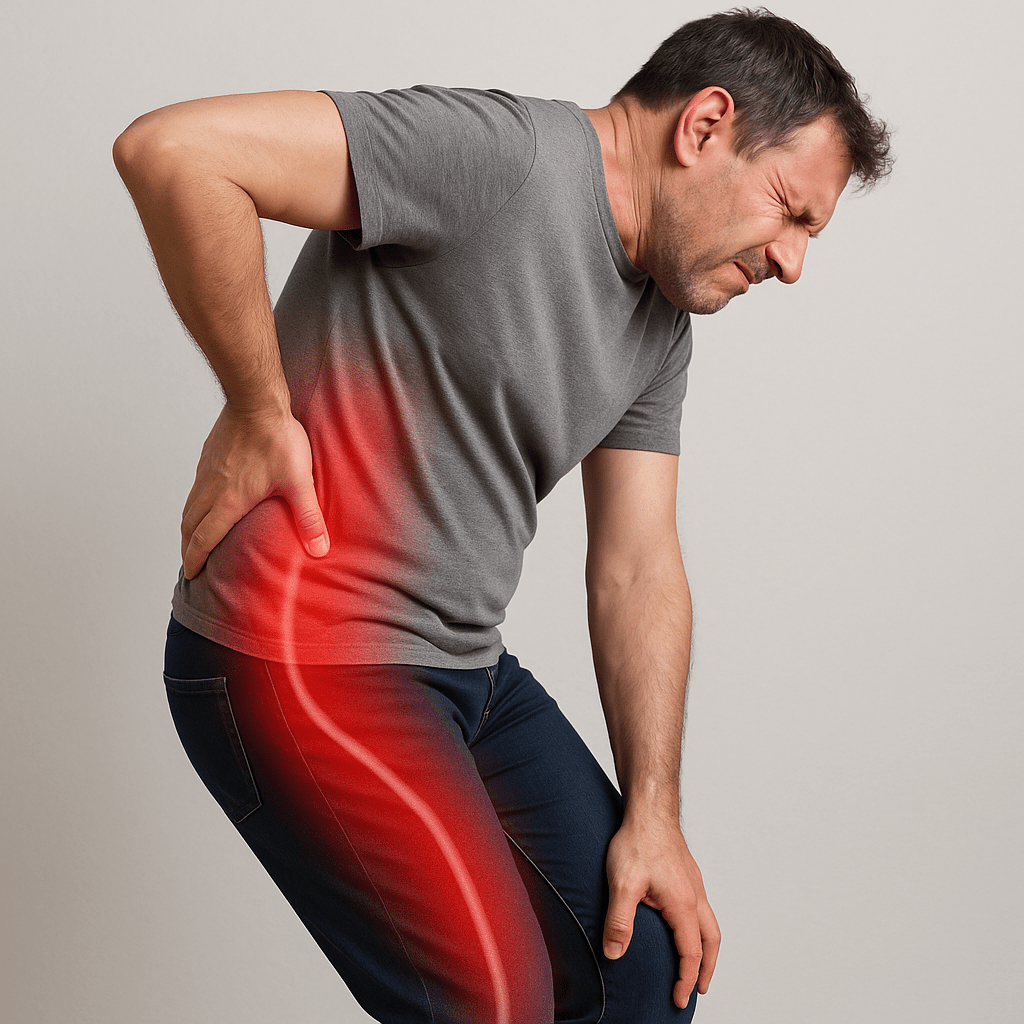
Sciatica isn’t a condition in itself — it’s a set of symptoms caused by irritation or compression of the sciatic nerve, the longest nerve in your body, which runs from your lower back through your buttock and down the back of each leg. When something presses on or inflames this nerve, pain travels along its path — which is why sciatica is usually felt as pain shooting from the lower back or buttock down one leg, rather than staying in the back alone. It almost always affects one side of the body. Because sciatica is a symptom of an underlying problem, effective treatment starts with finding what is irritating the nerve.
Symptoms of sciatica
Sciatica has a distinctive pattern that helps us diagnose it. Typical symptoms include pain that radiates from the lower back or buttock down the back of one leg, a sensation described as burning, shooting, or like an electric shock, numbness or a pins-and-needles tingling in the leg or foot, weakness in the affected leg, and pain that often worsens when sitting for long periods, standing up, coughing, or sneezing. The severity ranges from a mild ache to sharp, debilitating pain. If leg pain, numbness, or weakness is interfering with your daily life, an assessment can pinpoint the cause and start the right treatment.

How we treat sciatica at PMC
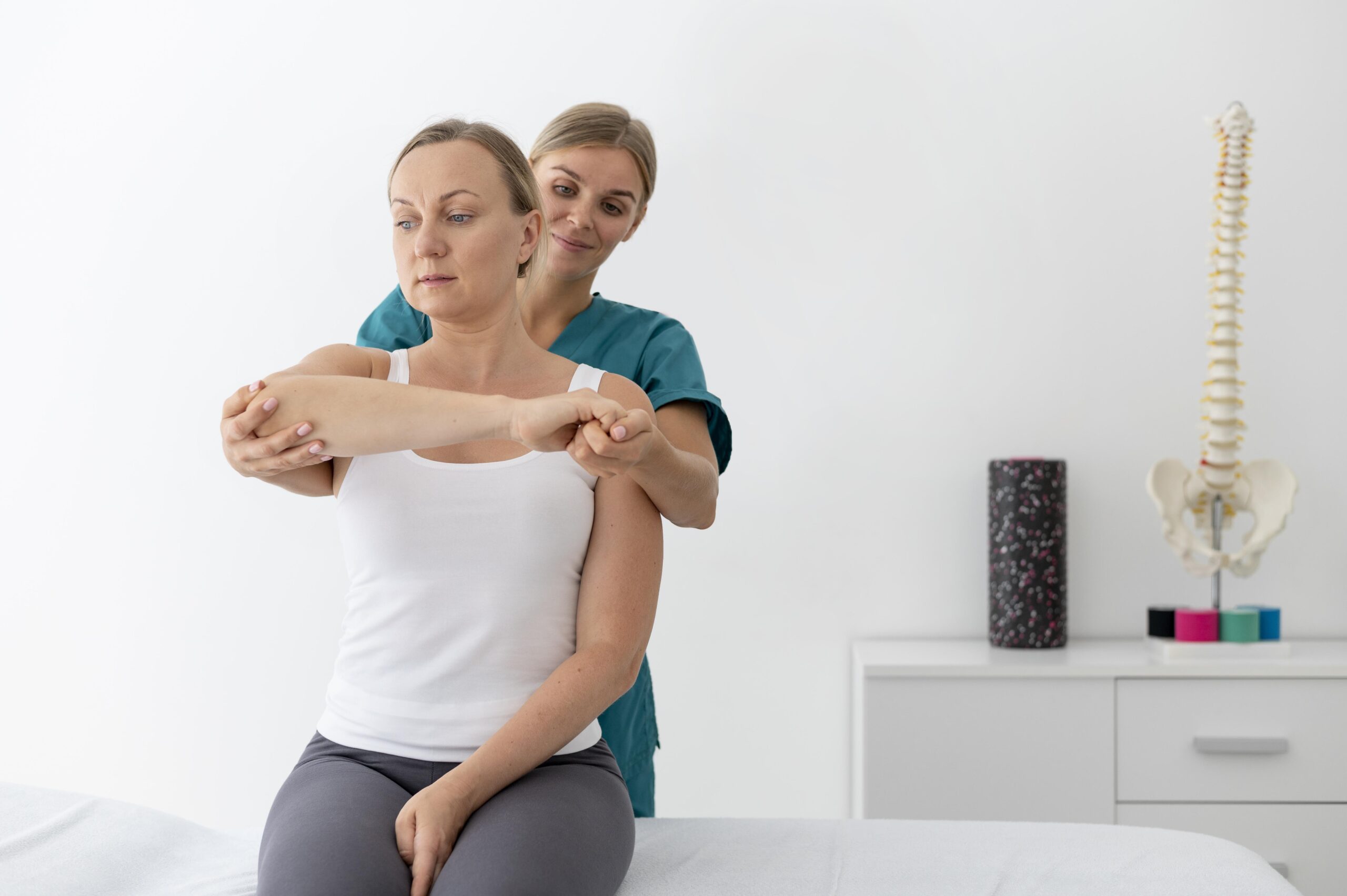
Our approach is non-surgical, evidence-based, and built around the cause of your sciatica — because relieving nerve pressure from a disc is different from easing a tight piriformis muscle. Most sciatica responds well to conservative care, and that’s our focus:
- Detailed assessment and diagnosis. Dr. Waqar Ali and our team assess your spine, nerve signs, movement, and strength to identify what is compressing or irritating the sciatic nerve.
- Pain and inflammation relief with advanced machines. We use modern therapeutic equipment — such as electrotherapy (TENS), therapeutic ultrasound, spinal decompression/traction, and laser therapy where appropriate — to reduce nerve pain and inflammation.
- Manual therapy and nerve mobilization. Hands-on techniques and gentle nerve-gliding (“neural mobilization”) help relieve pressure on the sciatic nerve and improve how it moves.
- Targeted exercise and core strengthening. Specific exercises reduce pressure on the affected nerve, strengthen the core and back muscles that support the spine, and are the best-proven way to prevent sciatica from returning.
- Posture, movement and lifestyle guidance. We show you how to sit, lift, and move to protect your lower back, plus practical changes to reduce the strain that triggered your sciatica.
What Our Clients Say
EXCELLENT Based on 155 reviews
 Posted on Google
 NAWAZ GUJJARMeri neck k moro ka msla tha bht zada ma ne baht elaj krwaya but pain thk ni ho ri thi phr ma pmc ai yha ma kch sessions liye now I'm 💯 %recoverd totally recommendedPosted on Google
 Sad MisI had a knee and back problem. I have tried many steroid injections but it didn't work. Then I visited PMC and got my treatment. I am very satisfied with their services as within few weeks I got better. All doctors are very cooperative. Dr maimoona treated me soo well. Highly satisfied.Posted on Google
 Anam KI highly recommend Dr. Aresha! I was suffering from severe cervical issues and intense pain but her professional approach and effective therapy sessions made huge difference. She listens carefully, explains the treatment plan, and provide comfort throughout the process. Thanks to her care, my pain has reduced significantly.❤️Posted on Google
 irfan faniTo be honest they are dealing with best treatment I am curing day by day and Allhamdullillah more power to Dr Waqar Ali and Staff plzz don't waste your time by using such heavy medications they are best. Shukria.Posted on Google
 ShaheenI have a pain in my back and neck from few months bht med li ma ne but relief ni a ra tha phr ma pmc ai yha ma ne kch sessions liye ab ma kafi better hn Alhmdulillah and my doctor is so cooperative must visit to Dr Ayesha she is so professional totally recommendedPosted on Google
 Sheikh Salman InayatGood behavior good guidelines good Dr mashAllahPosted on Google
 Hamza WattooMujhe knee pain tha to mein ny Hahn se treatment karvata to Mein full recovery hoe hao PMC clinic se
Self-help tips for sciatica relief at home
01
Keep gently moving. Long bed rest tends to make sciatica worse; gentle walking and movement usually help the nerve settle.
02
Try nerve-friendly stretches. Gentle stretches for the lower back and buttock can ease tension on the nerve — stop if any movement sends sharp pain down the leg.
03
Avoid long sitting. Sitting increases pressure on the discs and nerve; stand, stretch, and move every 30–45 minutes.
04
Use heat or cold. A warm pack can relax tight muscles; a cold pack can calm a sharp flare-up.
05
Mind your lifting. Bend from the knees, keep loads close to your body, and avoid twisting while lifting.
Ready to ease your sciatica pain?
Don’t let shooting leg pain control your day. Book a detailed assessment with PMC by Dr. Waqar Ali and get a personalized, non-surgical plan that targets the root cause of your sciatica.
Lahore: +92-320-7177607 Rawalpindi: +92-312-0796089