
Cervical Radiculopathy Treatment
Most cases of cervical radiculopathy — a pinched nerve in the neck — improve without surgery. At PMC (Pain Management Clinic) by Dr. Waqar Ali, we treat the neck pain, arm pain, numbness, and tingling caused by a compressed cervical nerve root with a personalized, non-surgical physiotherapy plan — combining cervical traction and advanced physiotherapy machines, hands-on manual therapy, and targeted exercise to take pressure off the nerve, relieve your symptoms, and restore normal movement. If pain is radiating from your neck into your shoulder, arm, or hand, start with a detailed assessment at our Lahore or Rawalpindi centres.

What is cervical radiculopathy?
Cervical radiculopathy is pain and neurological symptoms caused by a compressed or irritated nerve root in the neck (cervical spine). Many patients know it simply as a “pinched nerve in the neck.” Because each cervical nerve travels into the shoulder, arm, and hand, the symptoms are often felt far from the neck itself — a burning or electric pain down one arm, numbness or tingling in the fingers, or weakness when gripping or lifting
More common in younger adults — the soft centre of a disc pushes out and presses on the nerve, sometimes after lifting, an awkward movement, or a jolt.
More common after 40 — bone spurs, disc thinning, and narrowing of the openings where nerves exit the spine (foraminal stenosis) gradually squeeze the nerve root.
Long hours of desk and phone posture, previous neck injury such as whiplash, and weak deep-neck and shoulder-blade muscles that leave the cervical spine poorly supported.
What are the symptoms of cervical radiculopathy?
- Sharp, burning, or electric pain radiating from the neck into the shoulder, arm, or hand — usually on one side
- Numbness or pins-and-needles in the arm or specific fingers
- Weakness in the arm or grip — dropping objects, difficulty lifting
- Pain that worsens when turning or tilting the head, and sometimes eases when resting the hand on top of the head
- Neck stiffness and pain between the shoulder blades

How we treat cervical radiculopathy at PMC
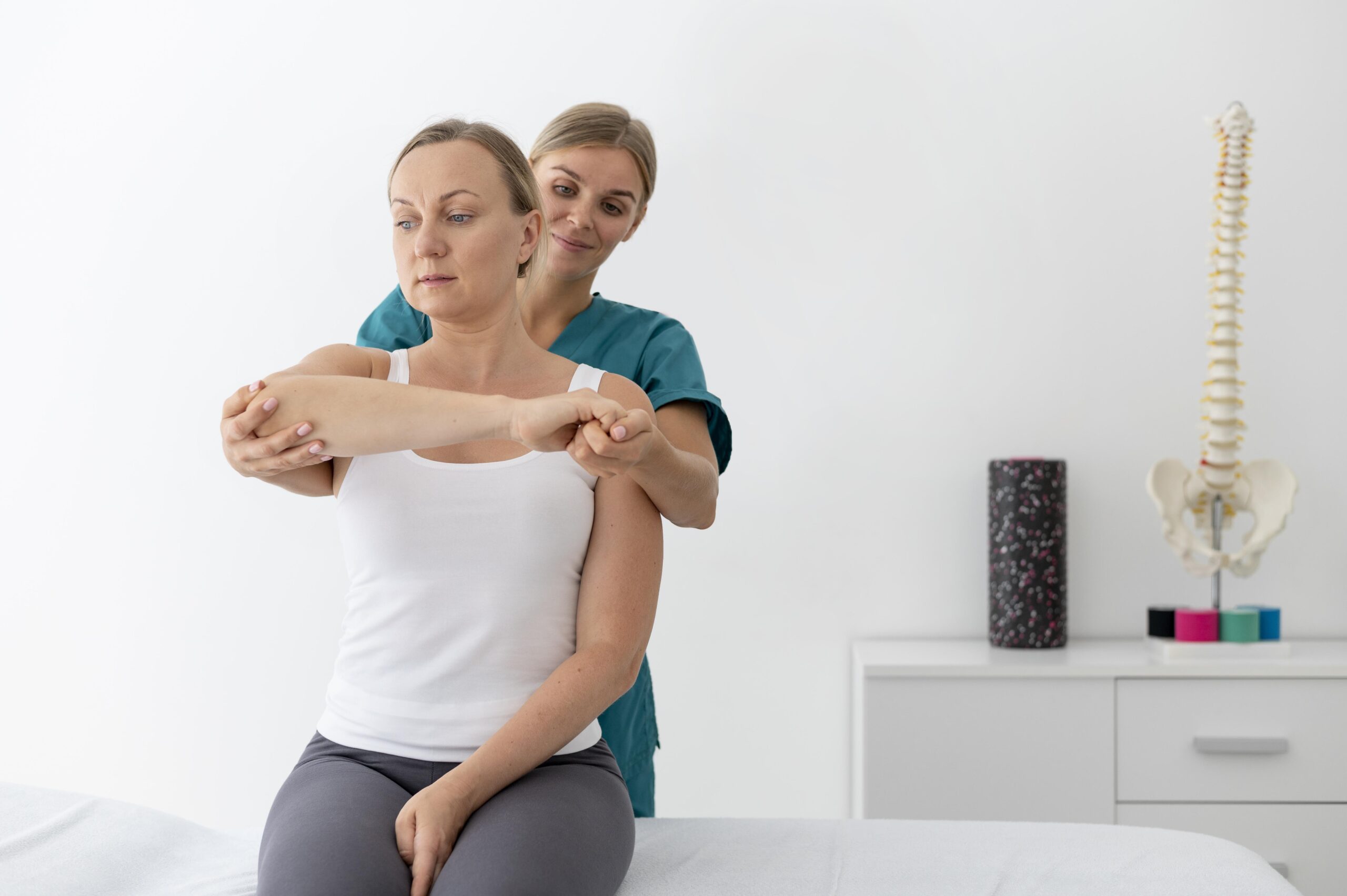
Our approach is non-surgical, evidence-based, and personalized to your diagnosis. We don’t rely on a single machine or technique — we combine the methods clinical research supports for nerve root compression, then tailor them to you:
- 1. Detailed assessment. Dr. Waqar Ali and our physiotherapy team examine your neck movement, posture, reflexes, sensation, and muscle strength to confirm which nerve root is affected and rule out red flags before any treatment begins.
- 2. Cervical traction / spinal decompression. Gentle, controlled traction opens the space around the compressed nerve root to reduce arm pain and tingling — one of the most useful modalities for radiculopathy when combined with exercise.
- 3. Advanced physiotherapy machines. Where appropriate, we use electrotherapy, therapeutic ultrasound, and laser therapy to calm pain and inflammation around the irritated nerve. These modalities support the plan — they are never a standalone quick fix.
- 4. Manual (hands-on) therapy. Skilled joint mobilization and soft-tissue techniques ease stiffness in the neck and upper back and relieve the muscle guarding that builds up around a painful nerve.
- 5. Targeted exercise and nerve-glide rehabilitation. A progressive program of deep-neck strengthening, shoulder-blade control, and nerve-gliding exercises — the part of treatment most strongly supported by evidence for lasting recovery.
- 6. Posture correction and education. We show you how to set up your desk, use your phone, and sleep in positions that take pressure off the nerve, so relief lasts beyond the clinic.
What Our Clients Say
EXCELLENTTrustindex verifies that the original source of the review is Google. Meri neck k moro ka msla tha bht zada ma ne baht elaj krwaya but pain thk ni ho ri thi phr ma pmc ai yha ma kch sessions liye now I'm 💯 %recoverd totally recommendedPosted on GoogleTrustindex verifies that the original source of the review is Google. I had a knee and back problem. I have tried many steroid injections but it didn't work. Then I visited PMC and got my treatment. I am very satisfied with their services as within few weeks I got better. All doctors are very cooperative. Dr maimoona treated me soo well. Highly satisfied.Posted on GoogleTrustindex verifies that the original source of the review is Google. I highly recommend Dr. Aresha! I was suffering from severe cervical issues and intense pain but her professional approach and effective therapy sessions made huge difference. She listens carefully, explains the treatment plan, and provide comfort throughout the process. Thanks to her care, my pain has reduced significantly.❤️Posted on GoogleTrustindex verifies that the original source of the review is Google. To be honest they are dealing with best treatment I am curing day by day and Allhamdullillah more power to Dr Waqar Ali and Staff plzz don't waste your time by using such heavy medications they are best. Shukria.Posted on GoogleTrustindex verifies that the original source of the review is Google. I have a pain in my back and neck from few months bht med li ma ne but relief ni a ra tha phr ma pmc ai yha ma ne kch sessions liye ab ma kafi better hn Alhmdulillah and my doctor is so cooperative must visit to Dr Ayesha she is so professional totally recommendedPosted on GoogleTrustindex verifies that the original source of the review is Google. Good behavior good guidelines good Dr mashAllahPosted on GoogleTrustindex verifies that the original source of the review is Google. Mujhe knee pain tha to mein ny Hahn se treatment karvata to Mein full recovery hoe hao PMC clinic se
Self-help tips for cervical radiculopathy relief at home
01
Modify, don’t immobilise. Keep gently moving your neck within comfort — complete rest and collars for long periods slow recovery.
02
Check your screen and phone height. Bring screens to eye level and avoid long periods looking down; change position every 30–45 minutes.
03
Try the arm-on-head position. If resting your affected hand on top of your head eases the arm pain, use it for short relief breaks.
04
Use heat for muscle tightness. A warm pack on the neck and upper shoulder can relax protective muscle spasm.
05
Sleep smart. Use one supportive pillow that keeps your neck level — avoid sleeping on your stomach with your head rotated.
Ready to stop the pain radiating down your arm?
Don’t wait for a pinched nerve to settle on its own while your arm gets weaker. Book a detailed assessment with PMC by Dr. Waqar Ali and get a personalized, non-surgical treatment plan built for your recovery.
Lahore: +92-320-7177607 Rawalpindi: +92-312-0796089