
Frozen Shoulder Treatment
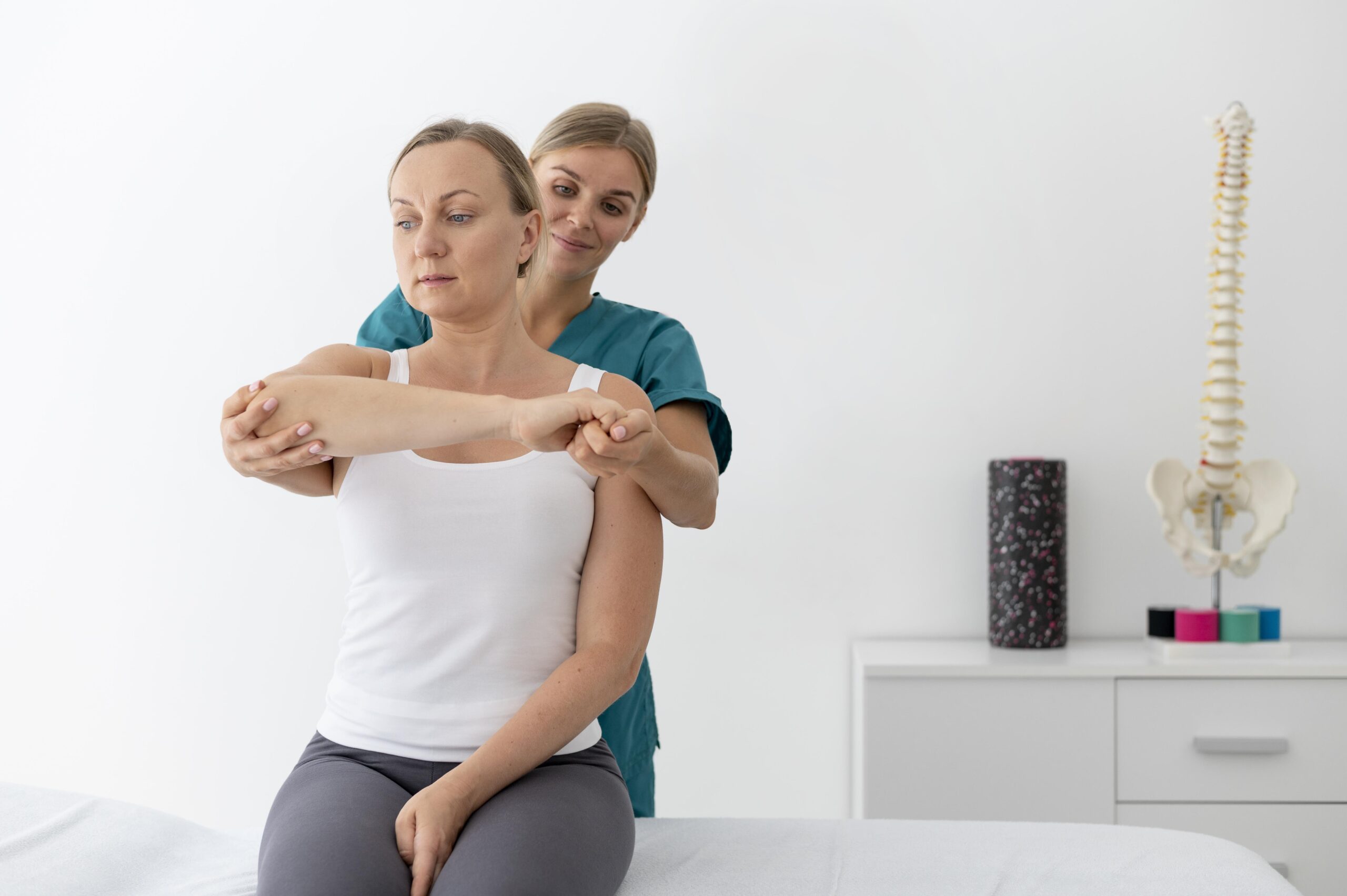
Frozen shoulder is treatable — and with the right physiotherapy you can relieve the pain and recover your shoulder movement far faster than leaving it to heal on its own, without surgery. At PMC (Pain Management Clinic) by Dr. Waqar Ali, we treat frozen shoulder (adhesive capsulitis) with a stage-based, non-surgical plan that combines advanced physiotherapy machines, hands-on manual therapy, and guided stretching to ease pain and restore your range of motion. Book a detailed shoulder assessment at our Lahore or Rawalpindi centers.

What is frozen shoulder?
The 3 stages of frozen shoulder
Freezing stage (painful stage) — around 6 weeks to 9 months. Pain gradually increases, often worse at night, and the shoulder slowly loses movement. This is usually the most painful stage.
Frozen stage (stiff stage) — around 4 to 6 months. The pain often eases, but stiffness dominates and everyday tasks — dressing, reaching, sleeping on that side — become difficult.
Thawing stage (recovery stage) — around 6 months to 2 years. Movement gradually returns as the capsule loosens. Physiotherapy is especially valuable here to restore full range and strength.
Symptoms of frozen shoulder
The main signs we assess at PMC include a dull or aching pain over the outer shoulder and upper arm, pain that is often worse at night and disturbs sleep, and a progressive loss of movement so that reaching overhead, behind your back, or out to the side becomes difficult. Unlike a simple muscle strain, the stiffness of frozen shoulder limits movement in every direction and doesn’t ease with a few days of rest. If your shoulder is getting stiffer rather than better, an early assessment can prevent months of avoidable pain.

How we treat frozen shoulder at PMC
Our treatment is non-surgical, evidence-based, and matched to your stage of frozen shoulder — because what helps in the painful freezing stage is different from what helps in the stiff and thawing stages:
- Detailed shoulder assessment. Dr. Waqar Ali and our team measure your range of movement, identify your stage, and rule out other shoulder problems before starting treatment.
- Pain relief with advanced machines. In the painful stage, we use modern therapeutic equipment — such as electrotherapy (TENS), therapeutic ultrasound, and heat or laser therapy — to calm pain and inflammation so you can move more comfortably.
- Manual (hands-on) therapy. Skilled joint mobilization and soft-tissue techniques gently free up the tight capsule and improve how the shoulder moves.
- Guided stretching and range-of-motion exercises. A carefully progressed stretching and mobility program is the core of frozen-shoulder recovery — restoring movement without overloading an irritated joint.
- Strengthening and return to function. As movement returns, we rebuild the strength and control needed for normal daily activities, work, and sleep.
What Our Clients Say
EXCELLENTTrustindex verifies that the original source of the review is Google. Meri neck k moro ka msla tha bht zada ma ne baht elaj krwaya but pain thk ni ho ri thi phr ma pmc ai yha ma kch sessions liye now I'm 💯 %recoverd totally recommendedPosted on GoogleTrustindex verifies that the original source of the review is Google. I had a knee and back problem. I have tried many steroid injections but it didn't work. Then I visited PMC and got my treatment. I am very satisfied with their services as within few weeks I got better. All doctors are very cooperative. Dr maimoona treated me soo well. Highly satisfied.Posted on GoogleTrustindex verifies that the original source of the review is Google. I highly recommend Dr. Aresha! I was suffering from severe cervical issues and intense pain but her professional approach and effective therapy sessions made huge difference. She listens carefully, explains the treatment plan, and provide comfort throughout the process. Thanks to her care, my pain has reduced significantly.❤️Posted on GoogleTrustindex verifies that the original source of the review is Google. To be honest they are dealing with best treatment I am curing day by day and Allhamdullillah more power to Dr Waqar Ali and Staff plzz don't waste your time by using such heavy medications they are best. Shukria.Posted on GoogleTrustindex verifies that the original source of the review is Google. I have a pain in my back and neck from few months bht med li ma ne but relief ni a ra tha phr ma pmc ai yha ma ne kch sessions liye ab ma kafi better hn Alhmdulillah and my doctor is so cooperative must visit to Dr Ayesha she is so professional totally recommendedPosted on GoogleTrustindex verifies that the original source of the review is Google. Good behavior good guidelines good Dr mashAllahPosted on GoogleTrustindex verifies that the original source of the review is Google. Mujhe knee pain tha to mein ny Hahn se treatment karvata to Mein full recovery hoe hao PMC clinic se
Self-help tips for frozen shoulder at home
01
Keep the shoulder gently moving. Within a comfortable range, regular gentle movement stops stiffness worsening — total rest tends to make a frozen shoulder tighter.
02
Do your prescribed stretches daily. Little and often beats occasional hard stretching, which can flare the joint.
03
Use heat before exercises. A warm pack or warm shower before your stretches helps loosen the joint and makes movement easier.
04
Protect your sleep. Try sleeping on the unaffected side with a pillow supporting the sore arm to reduce night pain.
05
Don’t push through sharp pain. Gentle stretch discomfort is fine; sharp pain is a signal to ease off. When in doubt, ask your physiotherapist.
Ready to free your shoulder?
Don’t wait years for a frozen shoulder to thaw on its own. Book a detailed assessment with PMC by Dr. Waqar Ali and get a personalized, stage-based plan to relieve your pain and restore your movement.
Lahore: +92-320-7177607 Rawalpindi: +92-312-0796089