
Kyphosis Treatment
Arthritis can’t be reversed, but the right physiotherapy can significantly reduce your joint pain and stiffness and help you move freely again — without surgery. At PMC (Pain Management Clinic) by Dr. Waqar Ali, we help patients with osteoarthritis, rheumatoid arthritis, and other joint conditions manage pain, protect their joints, and stay active through a personalized, non-surgical treatment plan that combines advanced physiotherapy machines, hands-on therapy, and targeted exercise. Start with a detailed joint assessment at our Lahore or Rawalpindi centers.

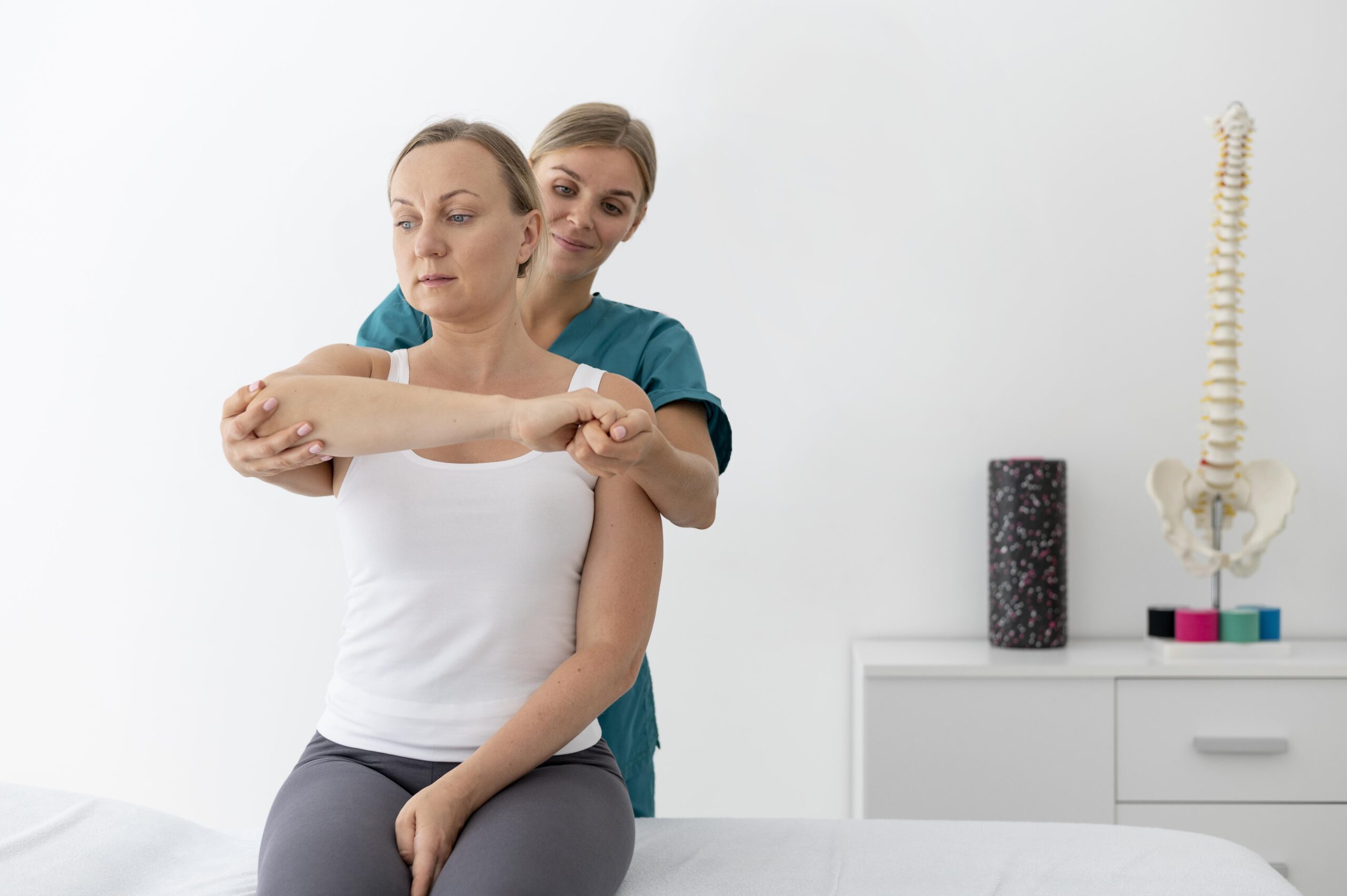
What is kyphosis?
Kyphosis is an excessive forward rounding of the upper (thoracic) spine — often described as a “hunchback” or “rounded back.” A gentle outward curve in the upper back is completely normal; kyphosis refers to a curve that has become exaggerated, typically beyond about 50 degrees. It can range from a flexible postural habit to a structural change in the shape of the vertebrae themselves. The type matters enormously, because it determines both what treatment can achieve and how quickly.
A flexible rounding driven by habit: long hours over desks, phones, and laptops, and weak upper-back muscles. It corrects when you consciously straighten up — and it responds best to treatment, at any age.
A structural curve that develops during the teenage growth spurt, when several vertebrae grow into a slightly wedged shape. The rounding is more rigid and does not fully straighten on effort. More common in boys, and often first noticed by parents.
In older adults, disc thinning, spinal degeneration, and — importantly — osteoporosis-related compression fractures of the vertebrae can gradually tip the upper spine forward, sometimes called a “dowager’s hump.
What are the symptoms of kyphosis?
- A visibly rounded upper back or forward-stooped posture — often more noticeable in photos or to family members
- Aching and fatigue across the upper and mid back, especially after prolonged sitting or standing
- Stiffness in the upper spine — difficulty straightening up fully or looking upward comfortably
- Rounded shoulders and a forward head position accompanying the curve
- Tight chest muscles and hamstrings, which commonly develop alongside the rounding
When to seek care promptly: a curve that is worsening quickly, sudden upper-back pain in an older adult (which can signal an osteoporotic compression fracture), or any numbness, weakness, or breathing difficulty should be assessed early. Severe structural curves are uncommon, but they respond best to early management.
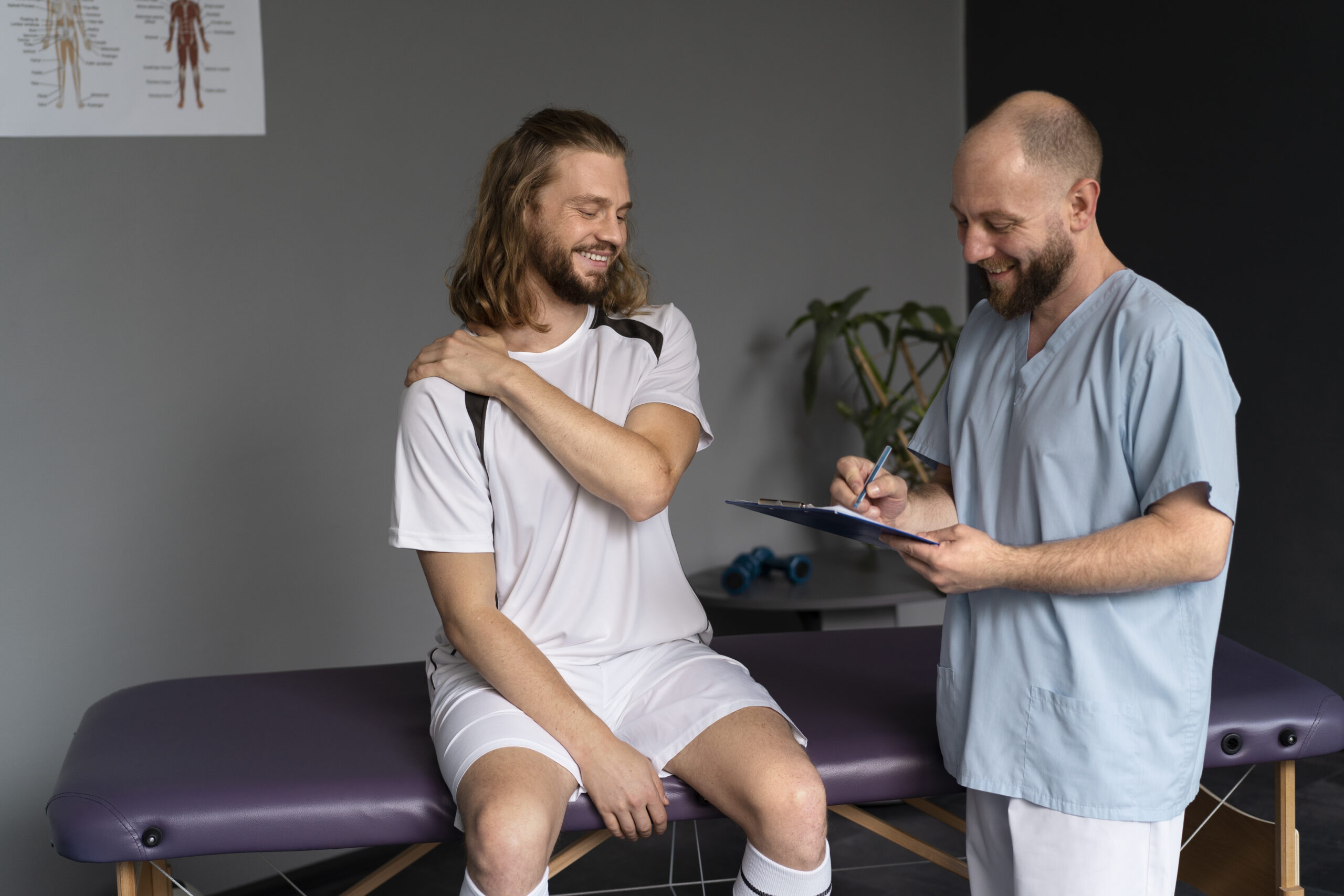
How we treat kyphosis at PMC
Our approach is non-surgical, evidence-based, and personalized to your type of kyphosis. The goal is to strengthen what holds you upright, loosen what pulls you forward, and retrain the posture your spine defaults to:
1. Detailed assessment. Dr. Waqar Ali and our physiotherapy team measure your spinal curve and flexibility, test the strength of your back extensor and shoulder-blade muscles, and identify whether the rounding is postural or structural before treatment begins.
2. Back extensor strengthening. Progressive strengthening of the muscles that extend and support the upper spine — the treatment most strongly supported by evidence for reducing kyphotic curve and pain, effective even in older adults.
3. Manual (hands-on) therapy. Joint mobilization restores movement to stiff thoracic segments, while soft-tissue techniques release the tight chest and shoulder muscles that pull the spine forward.
4. Advanced physiotherapy machines. Where appropriate, we use electrotherapy, therapeutic ultrasound, and laser therapy to settle pain and muscle fatigue around the curve — always in support of the exercise plan, never as a standalone fix.
5. Posture retraining and daily-habit correction. We rebuild your default posture — desk setup, phone habits, sitting and standing positions — so the improvement you gain in the clinic becomes the way you carry yourself all day.
6. Guidance for growing teens and older adults. For Scheuermann’s kyphosis in teenagers, we advise on exercise, monitoring, and when specialist referral for bracing is appropriate during growth. For older adults, we build bone-safe strengthening and advise on osteoporosis assessment where relevant.
What Our Clients Say
EXCELLENT Based on 155 reviews
 Posted on Google

 NAWAZ GUJJARMeri neck k moro ka msla tha bht zada ma ne baht elaj krwaya but pain thk ni ho ri thi phr ma pmc ai yha ma kch sessions liye now I'm 💯 %recoverd totally recommendedPosted on Google
 Sad MisI had a knee and back problem. I have tried many steroid injections but it didn't work. Then I visited PMC and got my treatment. I am very satisfied with their services as within few weeks I got better. All doctors are very cooperative. Dr maimoona treated me soo well. Highly satisfied.Posted on Google
 Anam KI highly recommend Dr. Aresha! I was suffering from severe cervical issues and intense pain but her professional approach and effective therapy sessions made huge difference. She listens carefully, explains the treatment plan, and provide comfort throughout the process. Thanks to her care, my pain has reduced significantly.❤️Posted on Google
 irfan faniTo be honest they are dealing with best treatment I am curing day by day and Allhamdullillah more power to Dr Waqar Ali and Staff plzz don't waste your time by using such heavy medications they are best. Shukria.Posted on Google
 ShaheenI have a pain in my back and neck from few months bht med li ma ne but relief ni a ra tha phr ma pmc ai yha ma ne kch sessions liye ab ma kafi better hn Alhmdulillah and my doctor is so cooperative must visit to Dr Ayesha she is so professional totally recommendedPosted on Google
 Sheikh Salman InayatGood behavior good guidelines good Dr mashAllahPosted on Google
 Hamza WattooMujhe knee pain tha to mein ny Hahn se treatment karvata to Mein full recovery hoe hao PMC clinic se
Self-help tips for kyphosis and rounded-back posture
01
Interrupt the slouch. Every 30–45 minutes at a desk, stand up, roll your shoulders back, and gently extend your upper back over the chair.
02
Raise your screens. Bring monitors and phones to eye level — hours of looking down feeds the forward curve more than anything else.
03
Open your chest daily. A doorway chest stretch, held gently, counters the tight muscles that pull your shoulders forward.
04
Strengthen your upper back. Simple rows, wall angels, and prone back-extension holds build the muscles that keep you upright.
05
Sleep flatter, not curled. Avoid stacking high pillows that hold the upper spine flexed all night; one supportive pillow is usually enough.
Ready to stand taller?
A rounded back doesn’t have to become your permanent shape. Book a detailed assessment with PMC by Dr. Waqar Ali and get a personalized, non-surgical treatment plan for your posture and your pain.
Lahore: +92-320-7177607 Rawalpindi: +92-312-0796089