
Sports Injury Treatment in Lahore & Rawalpindi
Most sports injuries — sprains, strains, and many knee, shoulder, and ankle injuries — recover fully with structured physiotherapy, without surgery. At PMC (Pain Management Clinic) by Dr. Waqar Ali, we diagnose the injury, settle the pain, and rebuild your strength step by step until you’re ready to play again — and less likely to get injured twice. Whether you were hurt playing cricket or football, at the gym, or on the padel court, start with a detailed assessment at our Lahore or Rawalpindi centers.
Which type of sports injury do you have?
Sports injuries fall into two groups — and the group decides the treatment:
A single moment — a twist, tackle, fall, or sudden sprint — causes immediate pain, swelling, or giving way. Common examples: ankle sprains, hamstring tears, knee ligament injuries, and shoulder dislocations. The first two weeks of care largely decide how well and how fast these heal.
Pain that builds over weeks of repeated load: tennis elbow, shin splints, tendon pain in the knee, shoulder, or Achilles, and stress reactions in bone. Rest alone rarely fixes them — they need the training load corrected and the tissue progressively strengthened.
Which sports injuries do we treat at PMC?
We treat athletes and active people of all levels — from club cricketers and footballers to gym-goers, runners, and padel players. The injuries we most commonly manage include:
- Ankle sprains and ligament injuries
- Knee injuries — ACL and other ligament sprains, meniscus injuries, runner’s knee, jumper’s knee (patellar tendinopathy)
- Muscle strains — hamstring, calf, groin, and quadriceps tears
- Shoulder injuries — rotator cuff injuries, impingement, instability after dislocation
- Elbow and wrist pain — tennis elbow, golfer’s elbow
- Shin splints and Achilles tendon pain in runners
- Cricket-specific injuries — fast bowler’s back pain, side strains, and throwing-shoulder problems
- Post-surgery rehabilitation — after ACL reconstruction, shoulder repair, or fracture fixation, working alongside your surgeon
How we treat sports injuries at PMC
Our approach is evidence-based, criteria-driven, and built around one goal: returning you to sport stronger than before the injury.
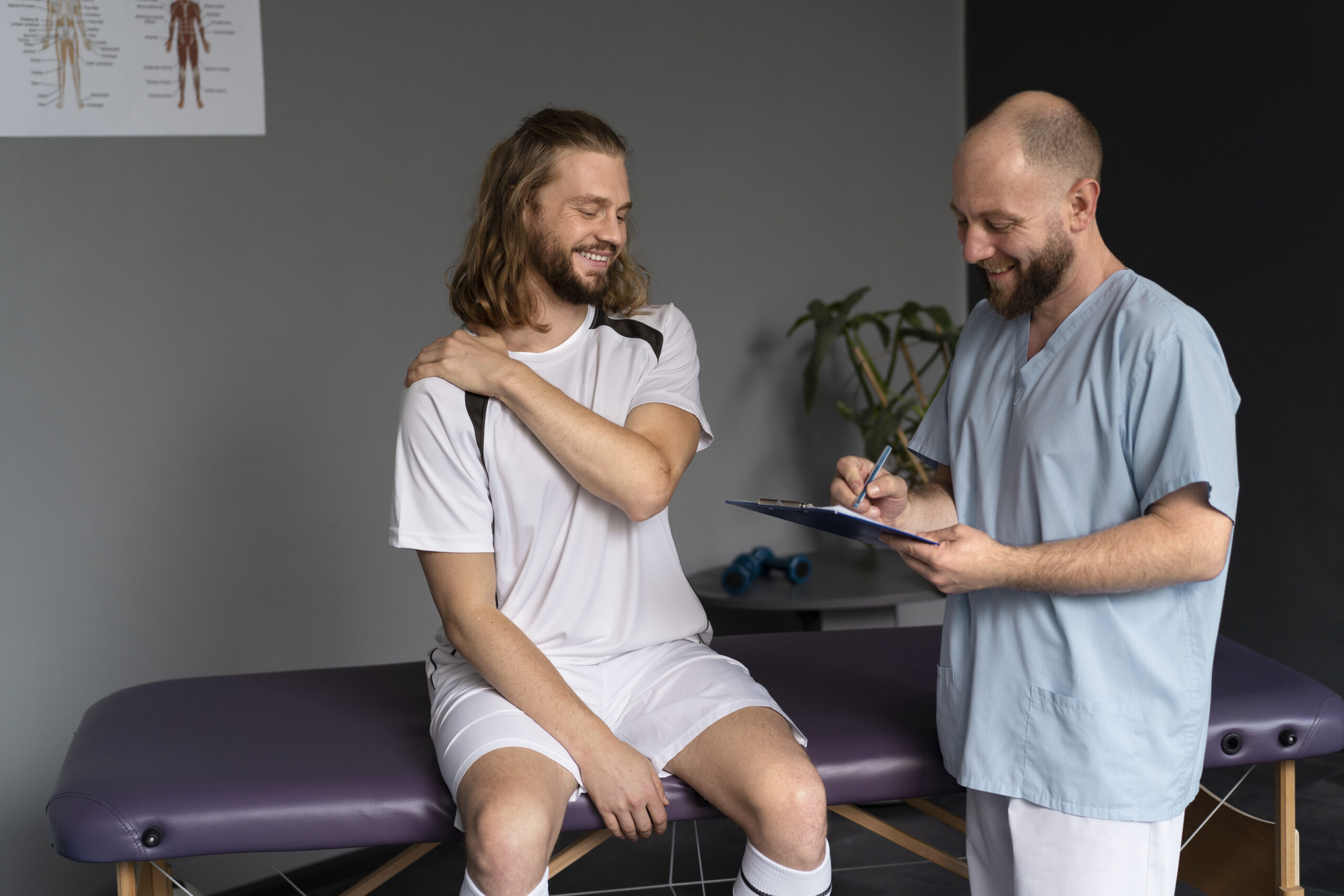
- Detailed assessment and diagnosis. Dr. Waqar Ali and our team examine the injured area, test strength and stability, and grade the injury. If the findings suggest a fracture or a complete tear that needs a surgical opinion, we tell you immediately and refer you — no guesswork.
- Settle pain and protect the injury. In the early phase we manage swelling and pain, and de-load the injured tissue without shutting you down completely — modern evidence shows early, protected movement heals soft tissue better than strict rest.
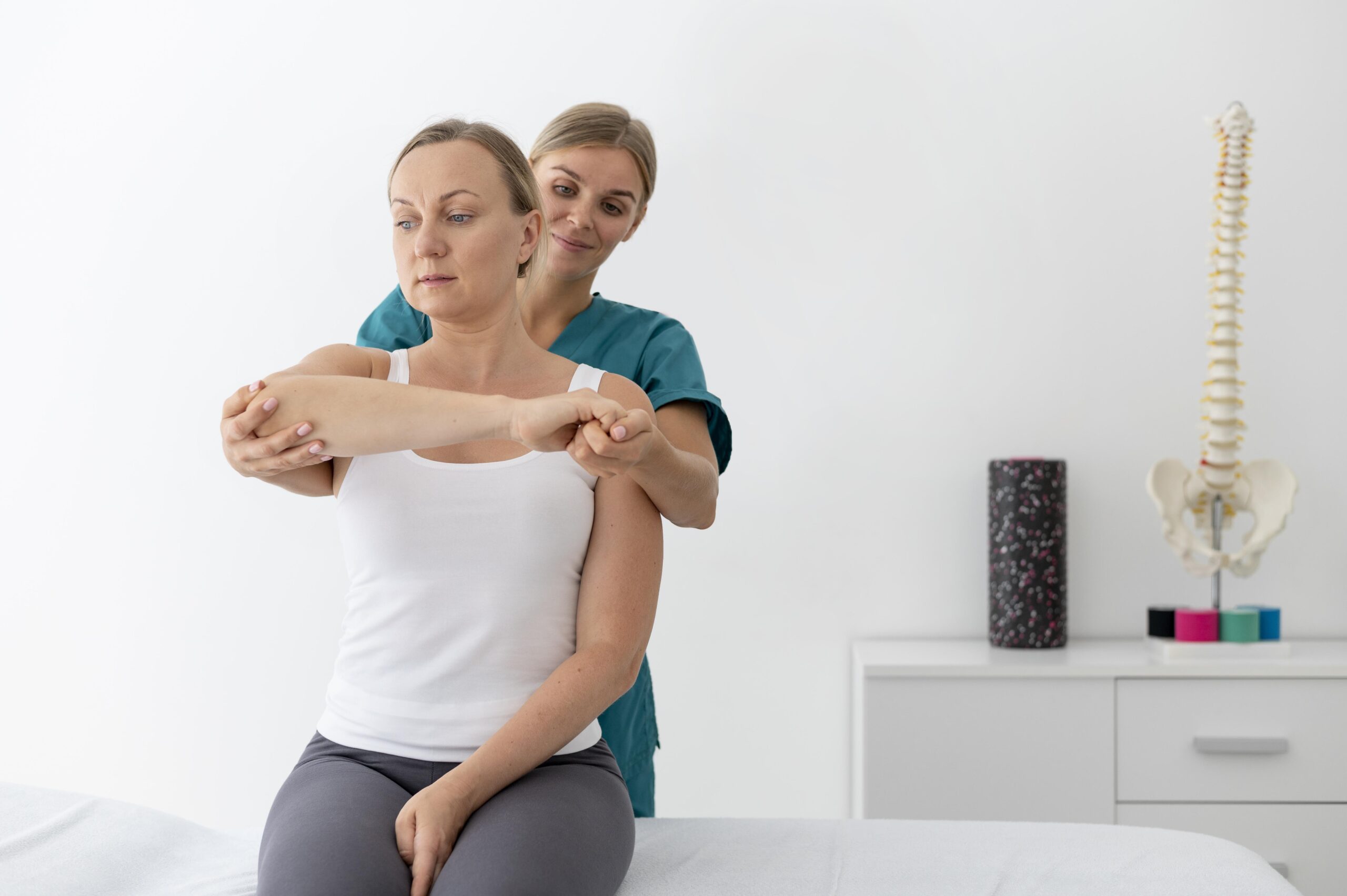
- Hands-on therapy and machines. Manual therapy restores joint movement and eases muscle guarding, supported where appropriate by electrotherapy, ultrasound, laser, shockwave (for stubborn tendon pain), and dry needling.
- Progressive strength and rehabilitation. The core of sports rehab: a staged exercise program that rebuilds strength, balance, and control — progressing from basic movement to sport-specific drills like sprinting, cutting, bowling, or overhead loading.
- Return-to-play testing and prevention. You go back when you pass objective criteria — strength, hop, and control tests — not just when a number of weeks has passed. We finish with a prevention program, because the biggest risk factor for a sports injury is a previous one.
What Our Clients Say
EXCELLENTTrustindex verifies that the original source of the review is Google. Meri neck k moro ka msla tha bht zada ma ne baht elaj krwaya but pain thk ni ho ri thi phr ma pmc ai yha ma kch sessions liye now I'm 💯 %recoverd totally recommendedPosted on GoogleTrustindex verifies that the original source of the review is Google. I had a knee and back problem. I have tried many steroid injections but it didn't work. Then I visited PMC and got my treatment. I am very satisfied with their services as within few weeks I got better. All doctors are very cooperative. Dr maimoona treated me soo well. Highly satisfied.Posted on GoogleTrustindex verifies that the original source of the review is Google. I highly recommend Dr. Aresha! I was suffering from severe cervical issues and intense pain but her professional approach and effective therapy sessions made huge difference. She listens carefully, explains the treatment plan, and provide comfort throughout the process. Thanks to her care, my pain has reduced significantly.❤️Posted on GoogleTrustindex verifies that the original source of the review is Google. To be honest they are dealing with best treatment I am curing day by day and Allhamdullillah more power to Dr Waqar Ali and Staff plzz don't waste your time by using such heavy medications they are best. Shukria.Posted on GoogleTrustindex verifies that the original source of the review is Google. I have a pain in my back and neck from few months bht med li ma ne but relief ni a ra tha phr ma pmc ai yha ma ne kch sessions liye ab ma kafi better hn Alhmdulillah and my doctor is so cooperative must visit to Dr Ayesha she is so professional totally recommendedPosted on GoogleTrustindex verifies that the original source of the review is Google. Good behavior good guidelines good Dr mashAllahPosted on GoogleTrustindex verifies that the original source of the review is Google. Mujhe knee pain tha to mein ny Hahn se treatment karvata to Mein full recovery hoe hao PMC clinic se
What should you do right after a sports injury?
01
Protect it. Stop playing and avoid movements that sharply increase pain — but don’t immobilise completely unless advised.
02
Elevate and compress. Raise the injured limb and use a compression bandage to limit swelling.
03
Use ice for pain relief. 10–15 minutes at a time in the first day or two eases pain — wrap it, don’t apply directly to skin.
04
Avoid the harm list. In the first 48 hours, avoid heat, alcohol, deep massage of the injured area, and anti-inflammatory overuse without advice — all can increase early bleeding and swelling.
05
Start gentle movement early. Pain-free range-of-motion within the first days speeds recovery. If you can’t move it or bear weight at all, get assessed first.
Ready to get back in the game?
Don’t guess with an injury — the wrong first two weeks can double your time out. Book a detailed assessment with PMC by Dr. Waqar Ali and get a structured rehab plan that gets you back to sport safely. Lahore: +92-320-7177607 Rawalpindi: +92-312-0796089