
Lower Back Pain: Causes, Symptoms and When to See a Physiotherapist
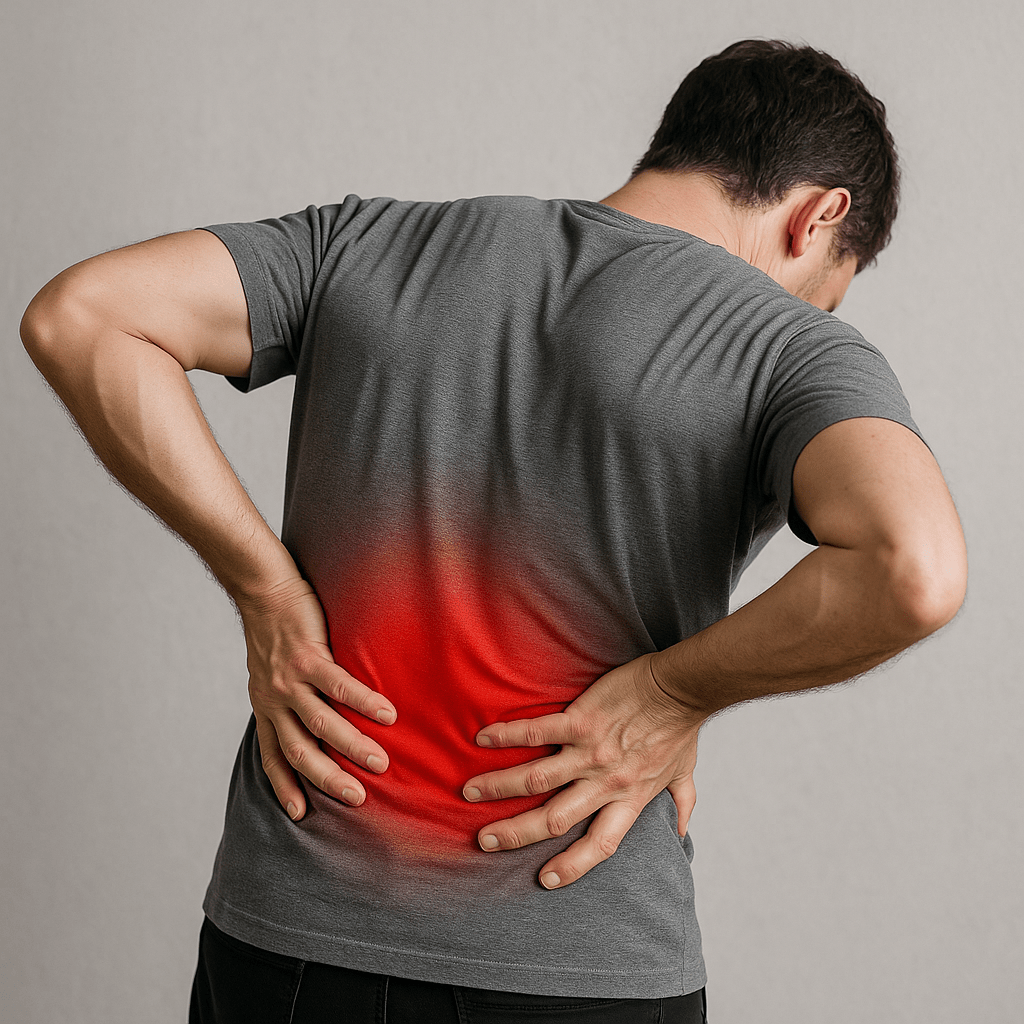
What causes lower back pain?
The lower back carries most of your body weight and moves thousands of times a day, so it is easy to overload. According to the Cleveland Clinic, the most frequent cause is an injury to the muscles or tendons of the back. In our Lahore clinic we commonly see these causes:
- Lifting a gas cylinder, a suitcase or a child awkwardly, or a sudden twist.
- Long hours slumped at a desk, in a car or on a sofa weaken the deep back and core muscles.
- A bulging or slipped disc can press on a nerve and send pain into the leg.
- Facet joints and discs stiffen with age, causing spondylosis or osteoarthritis of the spine.
- Sciatica is pain along the sciatic nerve, usually from a disc or narrowing in the spine.
- Common in people who do little regular exercise.
Less often, back pain comes from a fracture, infection, inflammatory condition or a kidney or pelvic problem. A proper assessment is how we tell these apart.
What are the symptoms of lower back pain?
Symptoms vary with the cause, but the pattern tells us a lot. Look out for:
- A dull, constant ache across the lower back, often worse at the end of the day
- Sharp or catching pain when bending or turning in bed
- Stiffness first thing in the morning or after sitting for a long time
- Pain that spreads into the buttock, thigh or calf, sometimes with tingling
The World Health Organization describes low back pain as the leading cause of disability worldwide. In our experience, the first episode is often ignored and the second or third is what brings people to the clinic.
Does sitting for long hours cause lower back pain?
Yes, prolonged sitting is one of the most common triggers we see in both cities. Office workers, students, drivers and people who spend hours on a laptop at home all present with the same picture: tight hip flexors, a flattened lower back and weak gluteal muscles.
In Lahore and Rawalpindi we also see local patterns: long motorbike commutes on uneven roads, cross-legged floor sitting for meals or work, and a sudden return to heavy lifting after weeks of inactivity. Sitting itself is not harmful. Sitting without a break, in the same slumped position, is the problem.
Is lower back pain a sign of a slipped disc or sciatica?
Not usually. Most lower back pain is what clinicians call non-specific mechanical pain, meaning it comes from muscles, ligaments and joints rather than a damaged disc. Physiopedia notes that non-specific pain accounts for the large majority of cases.
A slipped disc or sciatica becomes more likely when the leg pain is worse than the back pain, when it travels below the knee, or when you notice tingling, numbness or weakness in the foot. Coughing or sneezing that shoots pain into the leg is another clue. These cases still respond well to physiotherapy, but the plan is different, so accurate assessment matters.
When should I see a physiotherapist for lower back pain?
Most simple episodes settle in a few weeks with movement and sensible self-care. NHS guidance advises seeing a professional if pain is not improving after a few weeks of home care or is stopping your daily activities. In practice, we recommend booking an assessment if:
- The pain has lasted more than two weeks with no clear improvement
- This is your second or third episode in a year
- Pain spreads into the buttock or leg, or you feel tingling or pins and needles
- You are relying on painkillers to get through the day
- You cannot sit, drive, sleep or pray without pain
- You have started avoiding movement because you are afraid of making it worse
Early assessment shortens recovery and reduces the chance of the pain becoming chronic. Waiting months, which we see often, usually means more sessions and slower progress.
What are the red flags for lower back pain?
A small number of cases need urgent medical attention rather than physiotherapy. Go to a hospital emergency department the same day if you have lower back pain together with any of the following:
- Numbness or loss of feeling around the groin, genitals or back passage
- Weakness, numbness or tingling in both legs
- New difficulty controlling your bladder or bowels
- Pain following a serious fall, road accident or other trauma
- Fever, chills or feeling generally unwell with the back pain
- Unexplained weight loss, or a history of cancer
- Severe pain that started suddenly and is getting worse quickly, or that does not ease at night
If you are unsure, call us. We will tell you honestly whether you need a physiotherapist or a doctor first.
How does PMC treat lower back pain without surgery or medication?
Every patient starts with a detailed assessment of how you move, which structures are sensitive, your posture, your routine and any nerve signs. Only then do we build a plan. These are the techniques we use most for lower back pain in Lahore and Rawalpindi.
- Hands-on mobilisation of stiff spinal joints and release of tight muscles to restore normal movement.
- Used selectively for patients with disc or nerve-root symptoms, to gently reduce pressure on the affected level. We also use cervical traction when neck involvement is part of the picture.
- Low-level electrical currents to calm pain and muscle spasm in the acute stage so you can move again.
- Applied to irritated tissues to support healing and reduce local inflammation.
- For stubborn, long-standing muscle and tendon pain around the lower back and hips.
- Fine needles into tight muscle bands or acupuncture points to release spasm and ease pain.
- The part that keeps you better. Core and hip strengthening, mobility work and practical advice on sitting, lifting and sleeping.
We do not use every technique on every patient. A fresh strain may need a few sessions and a home programme. A long-standing disc problem needs a longer, staged plan. What we never do is mask the pain and send you home with the cause still in place.
What can I do at home for lower back pain?
Self-care matters as much as treatment. These are the tips we give most often:
- Bed rest slows recovery. Short, frequent walks are better than lying still.
- Stand and walk for two minutes every 30 to 40 minutes, including during long drives.
- A warm pack for 15 minutes eases spasm. Ice can help in the first two days after a sudden strain.
- On your side with a pillow between the knees, or on your back with a pillow under the knees. Avoid a very soft mattress.
- Keep the load close to your body, bend the knees and avoid twisting while lifting.
- Screen at eye level, feet flat, lower back supported. On the floor, sit against a wall or on a low cushion.
How long does lower back pain take to heal?
Most simple strains improve noticeably within two to six weeks. Physiopedia classifies pain lasting under six weeks as acute, six to twelve weeks as sub-acute and more than twelve weeks as chronic. Disc-related pain with leg symptoms often takes longer, typically several weeks to a few months of consistent treatment and exercise.
In our clinics the biggest factor in recovery time is not the diagnosis but how early treatment starts and how consistently the home programme is followed. Every back is different, so we give an honest estimate after assessment rather than a promise.
General Questions
Yes, for most people. Walking keeps the spine mobile and strengthens the hips. Start with short, flat walks of 10 to 15 minutes and build up. If walking clearly increases leg pain or numbness, stop and get assessed.
Side-lying with a pillow between the knees is the most comfortable position for most patients. Lying on your back with a pillow under the knees is a good alternative. Sleeping on your stomach tends to increase lower back strain and is best avoided during a flare-up.
Usually not. Most lower back pain can be assessed and treated without imaging. We will recommend scans only if there are red flags, nerve signs that are not improving, or if the findings would change your treatment plan.
In the majority of cases, yes. Manual therapy, targeted exercise, posture correction and pain-relieving modalities address the cause of mechanical back pain directly. Surgery is normally considered only for specific problems that have not responded to a proper course of conservative care.
It depends on the cause, how long you have had the pain and how consistently you do your home exercises. A recent strain may need only a few sessions. Long-standing disc or nerve-related pain usually needs a structured programme over several weeks. We give an estimate after your first assessment.
Ice is useful in the first 48 hours after a sudden injury to limit swelling. After that, heat is usually more helpful because it relaxes spasm and eases stiffness. Never apply either directly to the skin, and keep each application to about 15 minutes.
Book a lower back pain assessment at PMC
If your lower back pain has lasted more than two weeks, keeps returning or is spreading into your leg, do not wait for it to become chronic. Book at PMC Lahore on +92 320 7177607 or PMC Rawalpindi on +92 312 0796089.
Categories
Recent Posts